Launch success metrics
Launch thresholds
A card with the numbers that decide whether your product has earned more of your life, written before you launch. Thresholds set before launch are a measuring stick. Set after launch, they're a negotiation, and you'll lose it, because the person across the table is you.
The Code Was Never the Hard Part
Launch thresholds
Write these before you launch, then freeze them. Numbers negotiated after the fact always find a way to mean "keep going".
-
Attention
Not counted. Deliberately.
-
Sign-ups
How many, by when?
-
Return
What share come back unprompted?
-
Pull
What would count as someone asking, unprompted?
-
Payment
How many strangers pay, by when?
-
Decision date
The day you read this card against reality, chosen now.
Written before launch, while you have nothing to defend. Read again on the decision date, when you do.
neverthehardpart.com/templates/launch-thresholds
How to use it
- Fill in the card while you shape the concept, before you build anything. It belongs next to your one-page concept.
- Three numbers are enough. Of the strangers who try the core workflow, a share you choose in advance come back within two weeks. At least some number of people pay, if charging is part of the test. And a date, sixty or ninety days after launch, when you'll sit down and judge.
- The specific numbers are yours. Choosing them slightly wrong matters far less than writing them down at all.
- After launch, don't refresh the numbers hourly. Early numbers are small and noisy, and the pattern underneath matters more than the totals. Of those who tried it, did any come back? Of those who came back, did any say something with pull in it?
- On the decision date, hold the signals against the card, then decide: kill, redirect, or double down. If real people tried the product and the middle stays empty, no return and no pull, the market has answered.
The signals, weakest to strongest
Attention
Traffic, likes, upvotes, kind comments. It feels wonderful and predicts almost nothing, because people are congratulating the launch, not judging the product.
Sign-ups
Better. Someone traded an email for curiosity. But curiosity is cheap, and a pile of sign-ups who never appear again is the most common shape of early failure.
Return
The first signal you can trust. Someone used the product, left, and chose to come back without being pushed. For almost any product, the share of users who come back is the most telling number you have.
Pull
Return with force. Users complaining when something breaks, asking for specific things because they depend on the workflow, or mentioning you to someone else, unprompted.
Payment
The final word, if charging was part of your test. Not "would pay". Paid. Even a handful of strangers paying tells you more than a thousand encouraging comments.
What people do outweighs what people say, and what costs them something outweighs both.
Why I write them first
With Videofy, the video startup I co-founded, what I regret is the year or two before the ending, when the question was already being asked and I was still building instead of answering. Thresholds written in advance would have forced that question onto the table while it still had good answers available: a hard pivot, an early sale, a cheaper no.
From chapter 5, "The one-page concept", and chapter 12, "Kill, redirect, or double down".
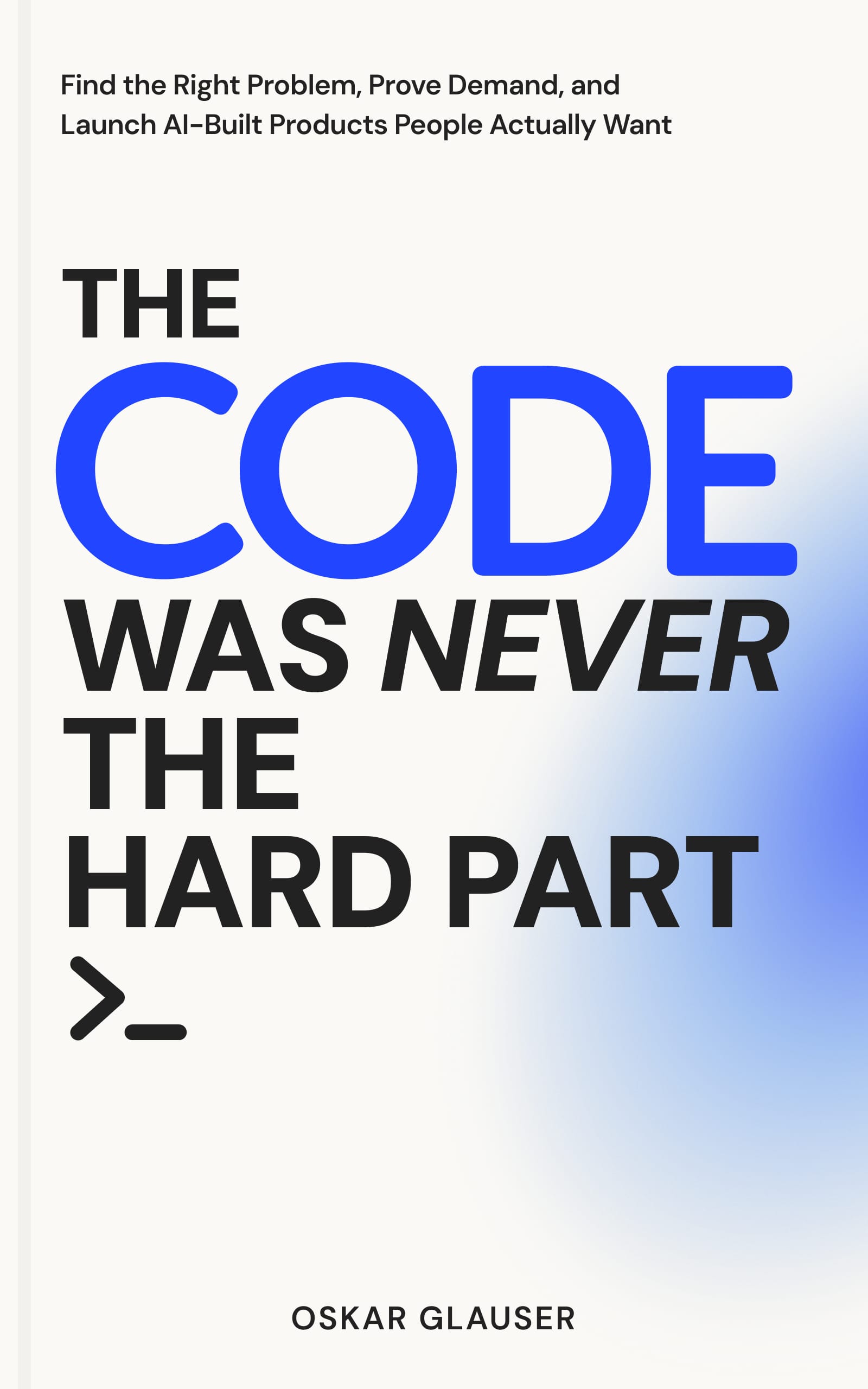
Kindle ebook · 15 October
Pre-order it now, read it on launch day.
$2.99
$9.99
launch price until 22 October
Read it in a weekend
It stays $2.99 through launch week, then goes up to $9.99. Pre-order now and you keep the lower price.
Amazon charges on release day, not today. It lands on your Kindle the morning it comes out.