Before you pick a problem
Which race are you in?
Two people can pick the same problem and still need completely different plans, because they're running different races. None of them is better than the others. Entering the wrong one is what gets expensive. Eight questions, about two minutes.
Your race
The three races
The side product
You have a job or a business. You want something small, profitable, and low maintenance. Your constraints are time and energy, and your enemy is complexity. That means narrow problems, small audiences you already belong to, and products that can run mostly without you.
The new venture
You want this to become your main thing. Your constraints are runway, how long you can afford to keep going, and how fast you learn. Your enemy is spending too long on a dead idea. So you want problems with room to grow, and to optimize for how fast you can find out the truth.
The credibility play
The product's real job is to demonstrate what you can do, feed your consulting or career, and build an audience. Revenue is a bonus. Your enemy is shipping something forgettable, so the problems worth picking are the ones where the solution itself is worth talking about.
The expensive mistake
The classic one is picking a venture-sized problem while living a side-product life, then wondering why you're exhausted and half finished. So I fit the problem to the race, and the race to the week I really have.
And some building isn't a race at all. Making things purely for the joy of it is a hobby, or art, and both are fine. The book is about the other kind, the kind that needs strangers to want it.
Next: run your candidate problems through the five-question filter, then check the numbers with the yeses calculator.
From chapter 2, "Pick your race".
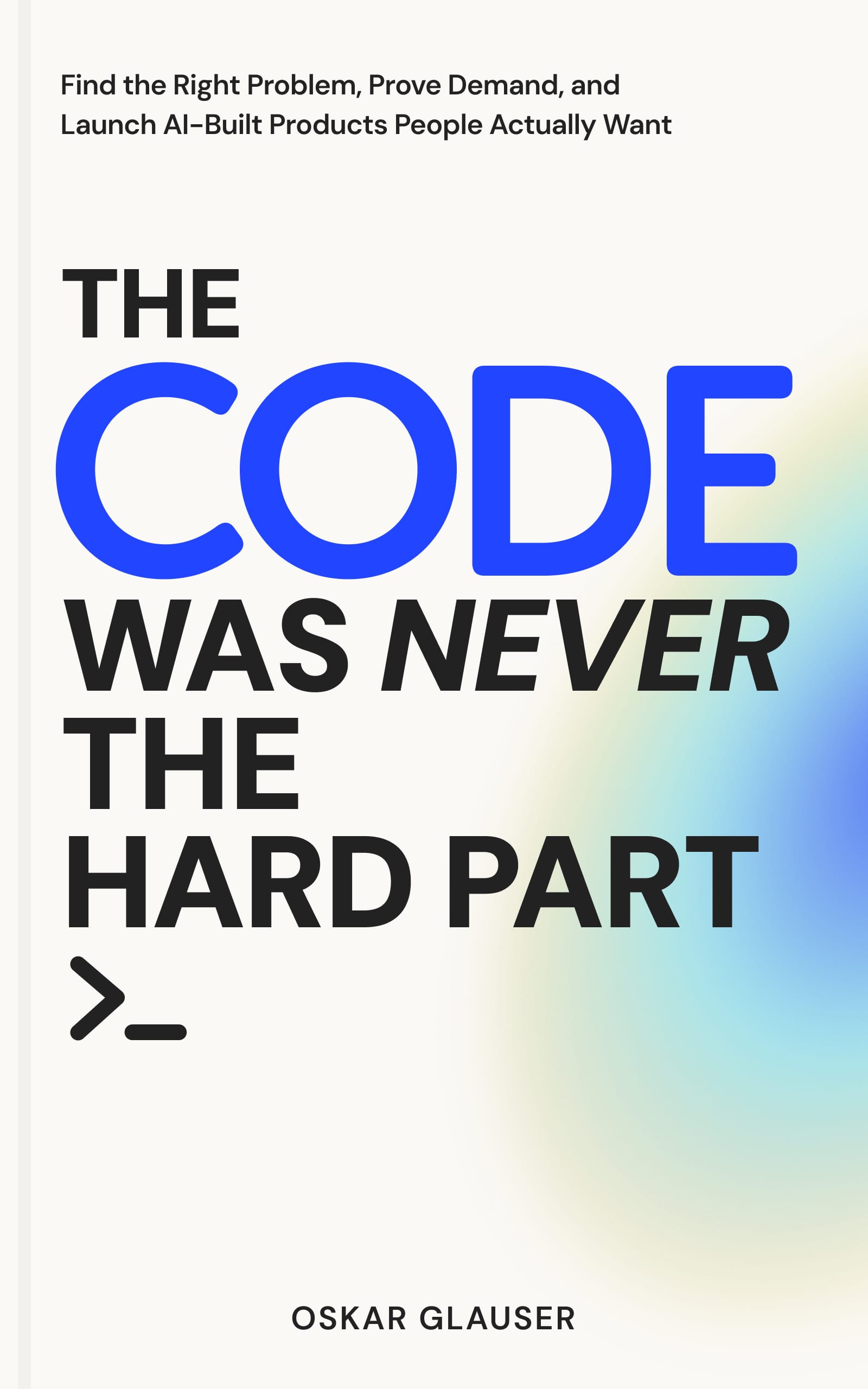
Kindle ebook · Out now
Out now. Read it this weekend.
$2.99
$9.99
launch price until 22 October
It stays $2.99 through launch week, then goes up to $9.99.
Read it on a Kindle or in the free Kindle app on your phone, tablet or computer. The paperback comes later.